Why is a digital footprint important?
A digital footprint matters because it is the version of you that gets consulted when you are not in the room: by an employer before an interview, a client before a first call, a landlord, a counterparty, or anyone deciding whether to take you seriously. It also matters in a quieter way, because the passive half determines how easy you are to locate, profile, and contact. What it does not do is decide most outcomes on its own, and being specific about where it actually carries weight is more useful than treating every result as consequential.
The situations where a footprint changes a decision
A footprint carries weight in proportion to how little other information is available. Early in any relationship, before there is a track record, a search result is a large share of what exists. Later, it is a small share.
That principle explains most of the pattern below. The moments where a footprint matters are the ones where someone is deciding whether to proceed at all: whether to interview, whether to reply, whether to sign, whether to refer. Once a person has met you and worked with you, the search result stops being the evidence.
Hiring, and the difference between a search and a screening
Two different things get called a background check, and they run under different rules.
The first is someone typing your name into a search engine. It is informal, it is unregulated, and you will never know it happened. It tends to confirm or complicate an impression rather than form one.
The second is a formal report ordered from a background screening company. That is a consumer report, and it carries obligations: the employer generally has to disclose that a report will be obtained, get written authorisation, and, before taking adverse action based on it, provide a copy of the report and a summary of your rights so you can dispute an error first. The Consumer Financial Protection Bureau publishes consumer guidance setting out how to request your own file and how the dispute process works. None of this is legal advice, and the specifics vary by state and by the type of role.
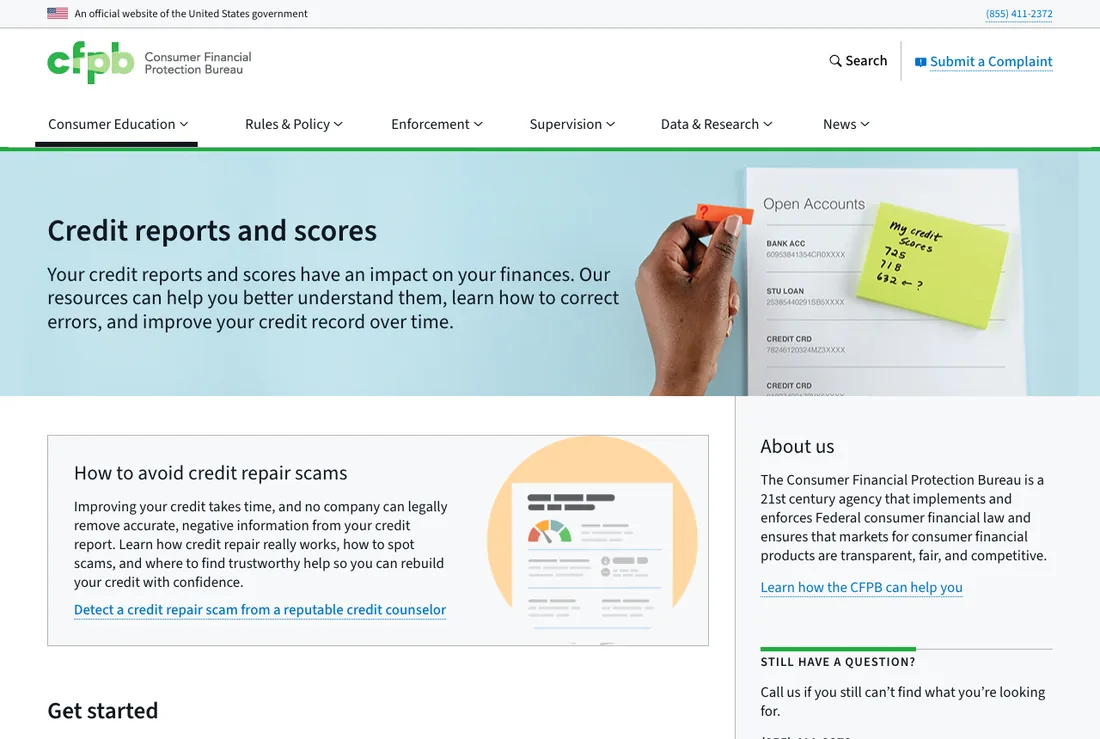
The Consumer Financial Protection Bureau's own consumer guidance. The right to see and dispute a screening report is why a formal check is a more tractable problem than an informal search. Screenshot taken 19 August 2026.
The practical takeaway is that the regulated version is the one you can correct. The unregulated version is the one you influence by what is published.
Clients, customers, and counterparties
For anyone who sells professional services, the footprint is doing pre-sale work continuously. A prospective client looks you up between hearing your name and answering your email, and what they find determines whether the reply happens.
Here the composition matters more than the sentiment. A first page consisting of your own current profiles, a bio, and a professional directory reads as an established practitioner. A first page consisting of people-search listings and nothing else reads as an absence, which is a weaker position than a mixed one.
Admissions, scholarships, and student life
This is the part most often written about in an alarming register, and it deserves a calmer one. Admissions offices are not running systematic sweeps of applicants' social media; most are processing far more applications than that would allow. Where a search happens, it tends to be prompted: a scholarship shortlist, a leadership role, an athletics recruitment, or something already flagged.
The reasonable advice for a student is therefore not to be afraid of the internet. It is to know what is public, to keep the accounts they use for one purpose separate from the ones they use for another, and to build a small amount of accurate, self-published material under their own name so that a search returns something they chose. That is a normal digital-literacy skill, and CISA's Secure Our World guidance covers the account habits that go with it in language a teenager can follow.
Lending, insurance, and tenancy
These decisions run on regulated data rather than search results. Underwriting and lending use credit files and application data; tenancy screening uses tenant screening reports. Those systems are subject to consumer reporting rules, which means you have rights to see and dispute what they hold.
Search results play a marginal and mostly indirect role, and anyone claiming a social media post determined a lending outcome is describing something outside the normal mechanics of those systems.
Identity risk, which is a separate problem
The passive half of a footprint is what makes a person easy to contact, locate, and impersonate. Addresses, relatives, phone numbers, and employment history compiled into a single profile are the raw material for targeted fraud and for account recovery attacks.
This is where broker data does real work, and it is why opting out has value even for someone with no reputation concern at all. California's data broker registry is a practical starting point for seeing who is registered to trade in this data, which turns a vague worry into a list you can work through.
Where it matters less than people assume
| Situation | Actual weight | Why |
|---|---|---|
| Established client relationship | Low | Track record outweighs search results |
| A single old post, unlinked | Low | It has to rank to be seen |
| Page three of results | Very low | Almost nobody goes there |
| Namesake confusion | Medium | Resolved by a qualifier search |
| An inaccurate broker listing | Medium | Matters for contact and fraud, not perception |
| A current news story | High | Trusted, ranks well, persists |
| An empty first page | Medium | Reads as absence in professional contexts |
The last row is the one people miss. Having nothing findable is not the same as having a good footprint, and in professional contexts it can be the weaker position of the two.
What actually helps
The durable move is to publish accurate material under your own name and keep it current: a profile, a bio page, a professional listing, a portfolio. It works because search engines favour material that is genuinely useful to the person searching, which Google Search Central's guidance on helpful, people-first content states directly, and because it gives a reader something to read that you wrote.
The second move is to reduce the passive half on a schedule, since that is where the identity risk sits and it is the half that quietly regenerates.
The third is to be honest with yourself about which category your situation falls into. Most people arrive at this page worried about a footprint in general and leave with one or two specific items. Sorting the general worry into a specific list is exactly what a reputation audit produces, and it tends to make the problem smaller rather than larger.
Questions about why your digital footprint matters
Why is a digital footprint important?
Because it is the version of you consulted when you are not present: by an employer before an interview, a client before a first call, or anyone deciding whether to proceed. The passive half also determines how easy you are to locate and profile.
What are the consequences of a digital footprint?
Mostly early-stage ones: whether someone interviews, replies, signs, or refers. It also affects exposure to targeted fraud, because compiled broker profiles supply the details used in impersonation and account recovery attacks.
Do employers check social media?
Informal searches happen and are unregulated. A formal report ordered from a screening company is a consumer report, which means the employer generally has to disclose it, get authorisation, and let you see and dispute it before acting on it.
Does a digital footprint affect college admissions?
Rarely as a systematic sweep. Where a search happens it tends to be prompted by a shortlist, a leadership role, or a recruitment process. Knowing what is public and publishing something accurate is the proportionate response.
Is having no online presence better?
Not usually. In professional contexts an empty first page reads as absence, and it leaves people-search listings as the only thing available. Accurate self-published material is the stronger position.